

Which platforms are best for your brand?
Here are three steps that will help you determine the best social media platforms for your business.
- Define your goals. Examples include:
- Increase brand awareness
- Strengthen customer relationships
- Become an industry thought leader
- Reach new audiences
- Increase web traffic
- Boost sales
- Position your company as a workplace of choice
- Generate leads
- Here’s a tip: Most platforms have their own “Insights” tab that allow you to measure your social analytics. There are also software solutions that manage social data, including Hootsuite, AgoraPulse and Sprout Social.
- Determine which platforms your target audience uses.
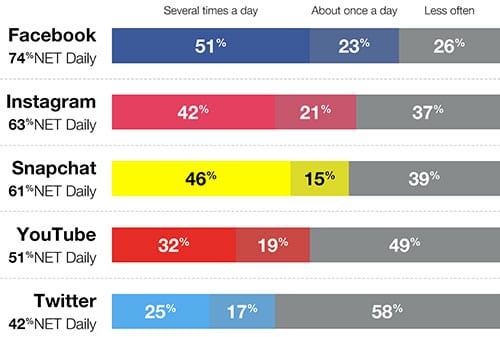
Source link: https://sproutsocial.com/insights/new-social-media-demographics/
- Think about the kind of content you want to promote, such as:
- Blog posts and white papers
- Infographics and photos
- Testimonials
- Product information and promotions
- Company updates
- User-generated content
- Contests
- Webinars and live streams
- E-books
- Videos
- A quick tip: Take stock of your current content library and its past performance. Update old articles with new information to keep them fresh and create a plan for generating new content.
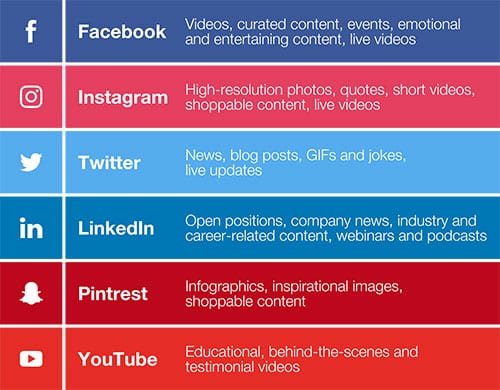
Here’s a breakdown of the types of content that are best for each social media platform:
How should you interact with followers?
Types of interaction:
- Shares or retweets
- Comments
- Likes
- Click-throughs
- Mentions (either tagged or untagged)
- Branded hashtags
The more users interact with your posts, the more likely they are to like and follow your page, which increases their engagement and improves your brand awareness with other users.
Examples of posts that encourage engagement:
- Contests
- Asking questions and inviting your audience to comment with answers or photos
- Polls
- Encouraging your audience to ask you questions (try an “Ask Me Anything” session)
- Spotlighting customers and employees
- Mentioning other brands
When interacting with your followers, remember to be consistent with your brand’s voice while still sounding human. Acknowledge comments as soon as you can and respond to all reviews, positive and negative. It’s helpful if you set aside a specific time every day to catch up on your social pages.
- Here’s a tip: When handling a negative review, always offer an option for continuing the conversation offline, so you can learn more about your customer’s experience and learn how to make it right.
Eager to jumpstart your social media campaign? Click here to start the conversation.